The savannah leaves hints everywhere — you just have to know how to read them. To a first-time visitor, lion, leopard and cheetah can blur into “big spotted cat.” Each one moves through the landscape in its own unmistakable way.
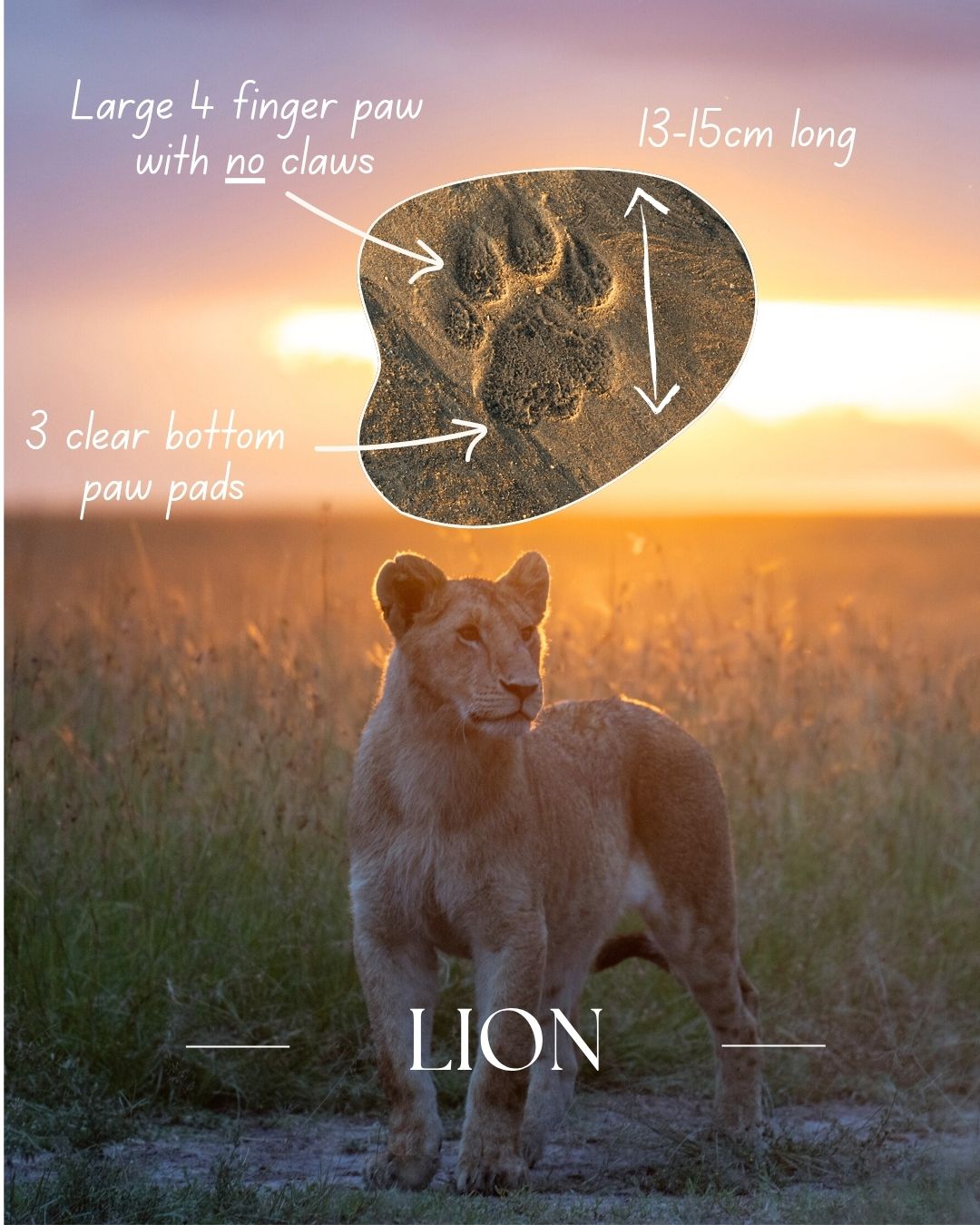
The easiest of the three, and not just because of the male’s mane. Lions are built like heavyweights: broad heads, tawny unmarked coats, and a habit of lounging in prides through the heat of the day, often draped over each other in the shade. Lions are the only truly social cat — prides are built around related females who hunt together, while coalitions of males hold a territory for only a few years before being ousted. That famous roar can carry up to eight kilometres, and between hunts they conserve energy, sleeping as much as twenty hours a day. Where there’s one lion, there are usually more.
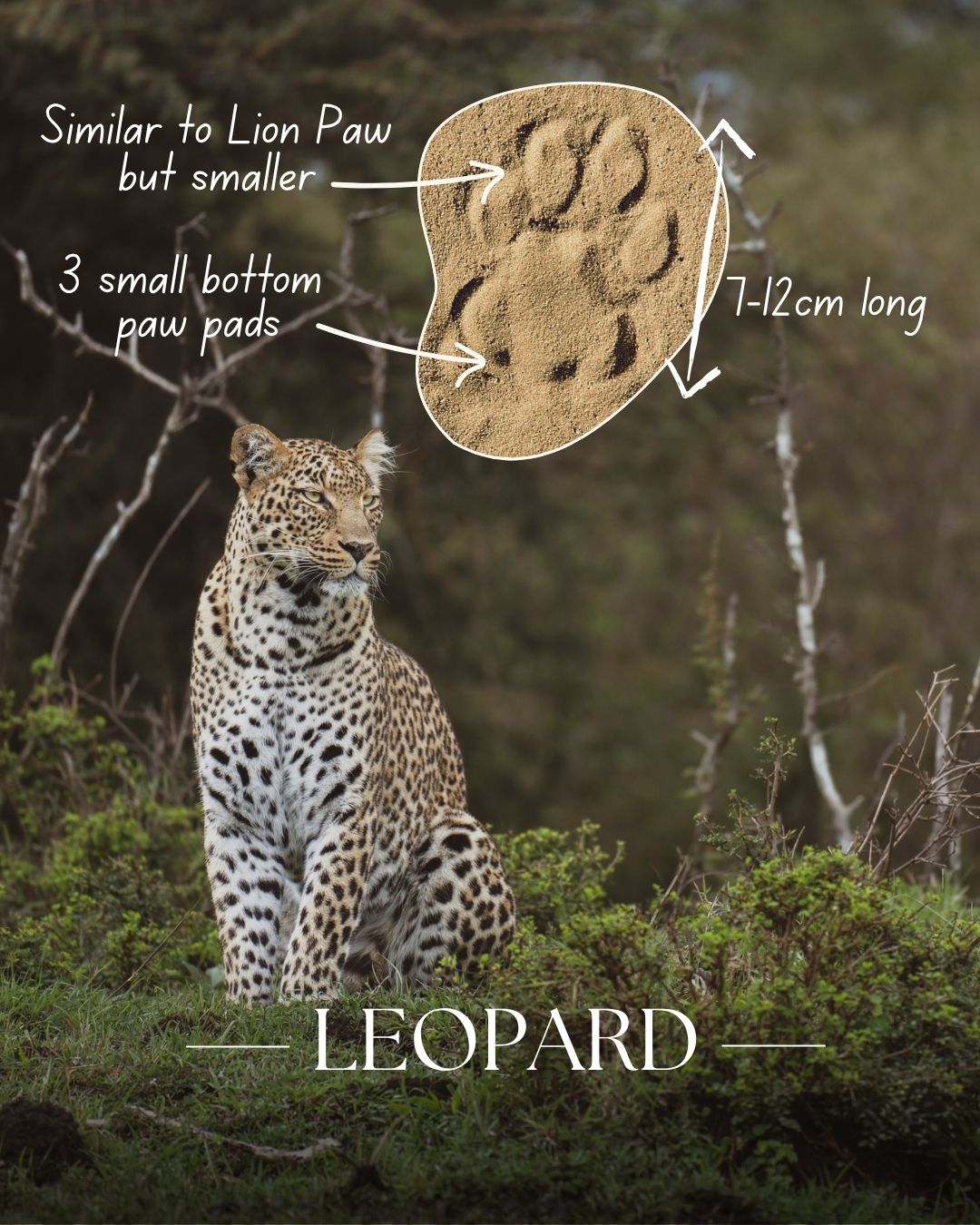
Secretive, muscular and solitary, the leopard is the prize sighting for most safari-goers. Look for rosette markings — spots arranged in little clusters like flowers — a heavy, powerful chest, and a love of trees. Pound for pound they are astonishingly strong, able to haul a carcass two or three times their own weight into the branches to keep it from lions and hyenas. A tail hanging from a limb, or an impala draped over a bough, is the classic giveaway. They favour dawn, dusk and dense cover, which is exactly why a sharp-eyed guide matters.
A leopard’s rosette pattern is as unique as a human fingerprint — no two leopards are alike, and researchers (and good guides) recognise individuals purely by their spots.
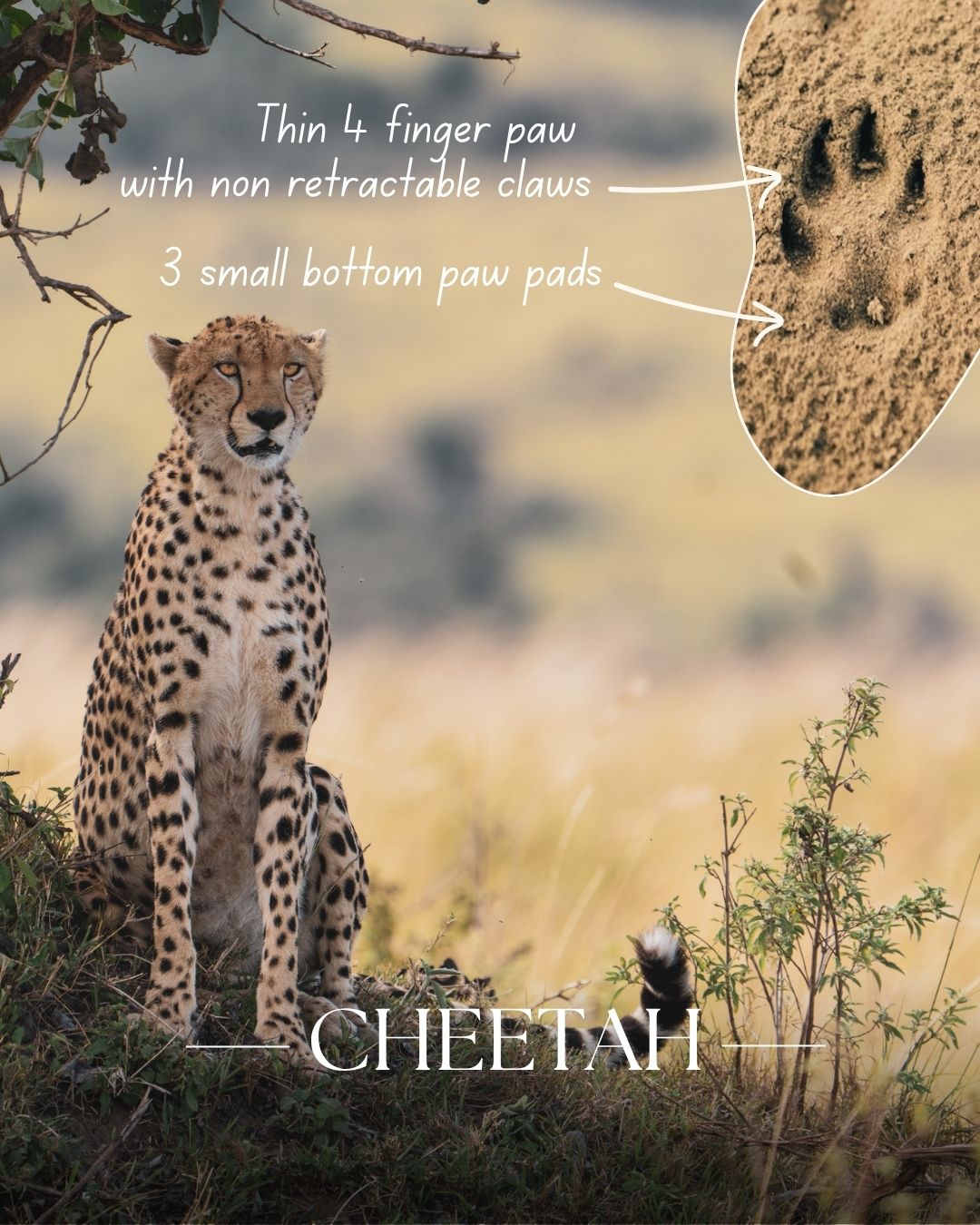
Everything about a cheetah says speed: slender and greyhound-lean, with two black tear marks running from the inner eye down the muzzle — the surest single clue. It is the fastest land animal on earth, going from a standstill to 100km/h in about three seconds and topping out near 110km/h, though only in short, explosive bursts. Unusually for a cat, its claws are only semi-retractable, acting like an athlete’s spikes for grip. It hunts by day to avoid stronger night-time rivals, and those “tear marks” aren’t just striking — they cut the sun’s glare, much like the eye-black worn by athletes.
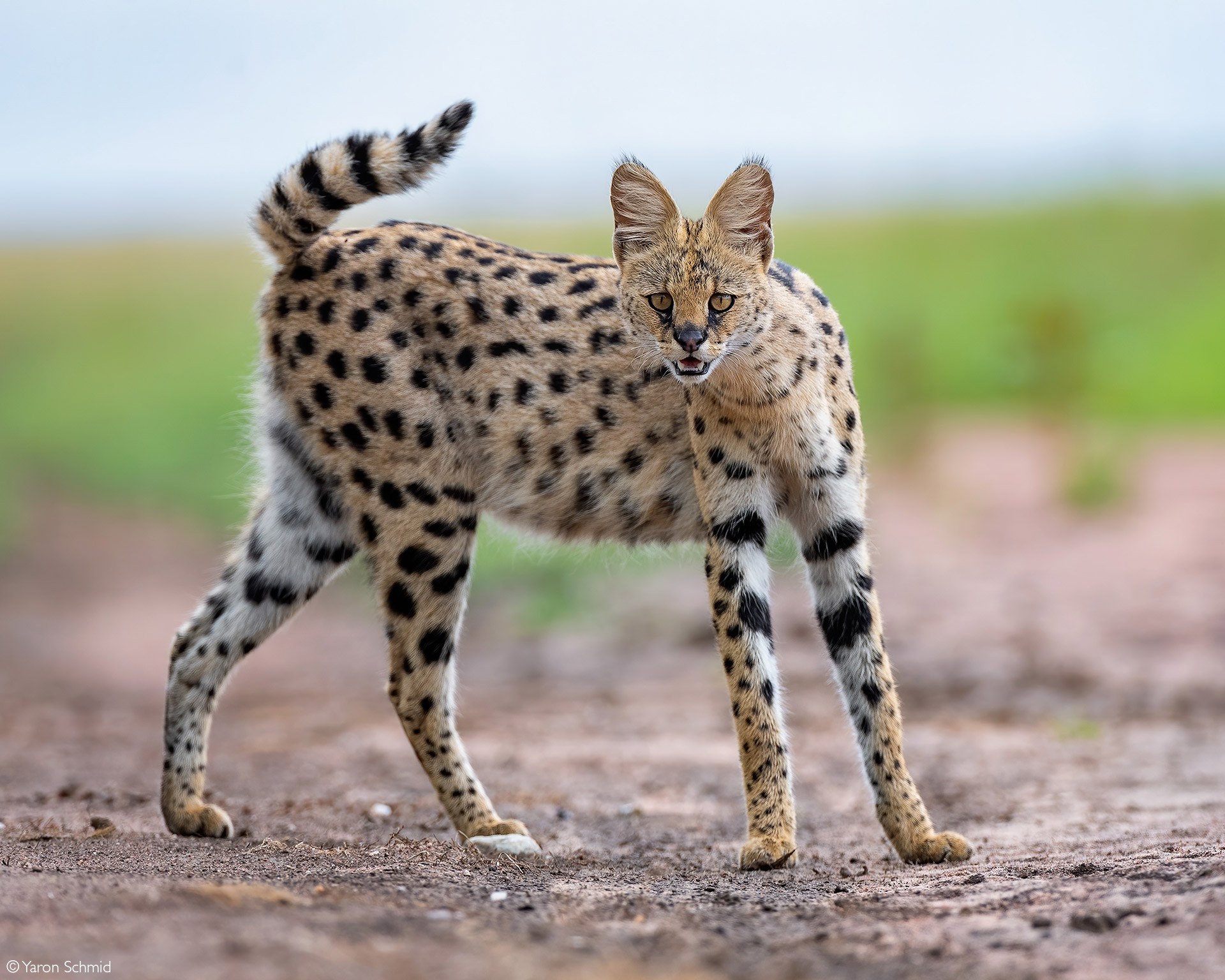
Africa has smaller cats that trip up the unwary. The serval is a slender, long-legged, big-eared hunter of the grasslands, its coat spotted like a miniature cheetah; the caracal is a russet cat with dramatic black ear-tufts; and the shy African wildcat looks deceptively like a tabby. One more trap for the eye: lion cubs are born with faint spots, so a “spotted lion” is simply a youngster, not a leopard in disguise.